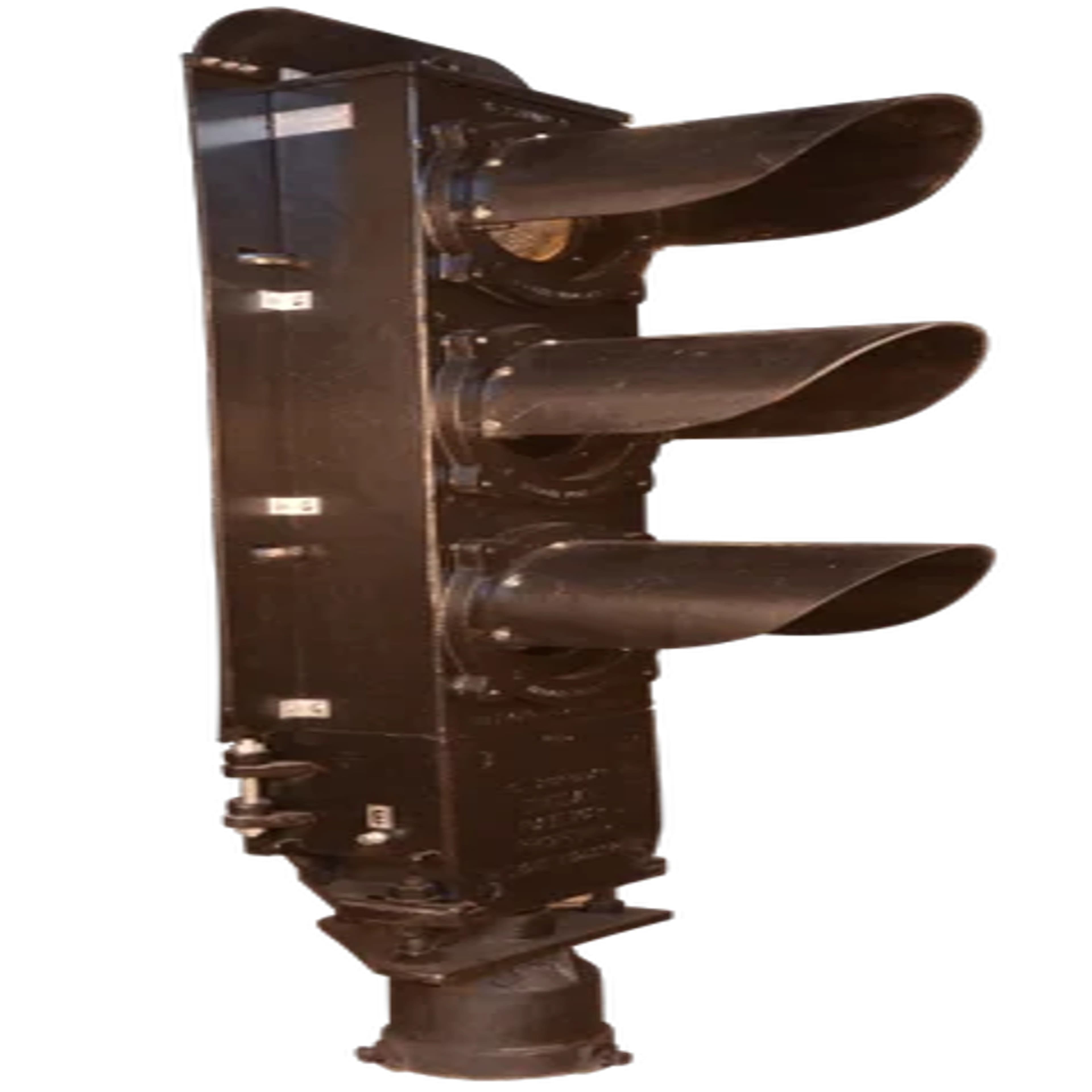
Related project requirement
Need specifications or pricing for Route Indicators Metallic/FRP?
Share the quantity, drawing or specification and delivery location for a project-specific review.
At a diverging railway layout, a driver may need to know not only that movement is authorised but also which route has been set. A route indicator works with the main signal to provide that route information. It may display a direction, a pattern of lights, a letter or a number according to the approved signalling design.
Route indication is part of a safety-critical system. The selected type, position, display and controls are determined by signalling principles, sighting requirements and the interlocking design. The descriptions below are an equipment overview, not an operating instruction.
Why route indicators are used
Providing a separate main signal for every possible diverging route is not always the preferred arrangement. A route indicator allows a signal to work with an additional display that identifies the route selected by the interlocking. This can make the signalling layout clearer and more practical where several routes diverge.
Common types of railway route indicator
Stencil-type route indicator
A stencil-type route indicator displays an illuminated character or symbol through a prepared stencil. Separate compartments may be associated with different route characters. The display is particularly useful when a letter or number identifies a platform, line or route.
Multi-lamp route indicator
A multi-lamp arrangement forms a character or route display using a matrix or group of light sources. Its construction and permitted displays depend on the applicable specification. Maintenance access, uniform visibility and the behaviour of the display under partial failure are important design considerations.
Junction-type route indicator
A junction-type indicator uses a pattern of lights to show the direction of a diverging route. The spatial arrangement communicates direction rather than spelling out a route number. It is typically considered where a directional indication is appropriate and adequate sighting can be achieved.
Route indicator versus signal aspect
The main signal aspect conveys the movement authority or restriction defined in the operating rules. The route indicator supplements that information by identifying the route. A lit route display is not a substitute for the main signal aspect, and its operation must be correctly proved and controlled by the signalling system.
Principal Vinimay offers route indicators in metallic and FRP configurations. The required type, display and housing construction should be specified from the approved project documents.
Selection and specification checklist
- Indicator type and every required display, character or directional pattern.
- Applicable specification, drawing, dimensional envelope and mounting interface.
- Required visibility, optical performance and viewing conditions.
- Housing material, finish, sealing and environmental requirements.
- Electrical interface, internal wiring, terminal and cable-entry details.
- Access, maintainability, labelling and required test documentation.
Metallic versus FRP construction
The housing material should be evaluated against the same performance requirements. Metallic construction may offer particular mechanical and fabrication characteristics, while FRP can offer lower weight and inherent resistance to some forms of corrosion. Neither description alone establishes compliance. The drawing, material specification, fire behaviour where applicable, mechanical performance and inspection criteria decide suitability.
Visibility and maintainability matter together
A route indicator must be visible to the driver under the specified conditions, but it must also be maintainable. Access to light sources, modules, wiring and seals should not compromise alignment or weather protection. Clear internal identification helps technicians trace circuits and restore the correct configuration after maintenance.
A better procurement enquiry
Avoid asking only for a “route indicator.” State whether the requirement is stencil, multi-lamp or junction type; list the route displays; attach the current approved drawing; identify the housing and mounting requirement; and specify the required inspection and test documents. That information enables meaningful technical and commercial comparison.
New search terminology: routing signal and route indicator
A routing signal is a signal defined by railway operating rules, while a route indicator is apparatus that supplements a signal by showing the selected route. The terms are related but should not be used interchangeably in specifications or purchase enquiries.
Read the detailed comparison in Routing Signal vs Route Indicator.
Multi-lamp type route indicators
A multi-lamp indicator forms an approved number or letter using a matrix or arranged group of light sources. The display list, housing, proving, visibility and electrical interface must be defined by the applicable design and specification.
See the focused guide to multi-lamp type route indicators.
Junction-type route indicators
A junction-type indicator communicates direction through an approved spatial light pattern. It should not be treated as interchangeable with a stencil or multi-lamp character display.
Review junction-type route indicators and the procurement and sighting questions that define a complete enquiry.
Use the route-indicator procurement checklist when preparing the project supply boundary.
Frequently asked questions
What does a railway route indicator show?
It supplements the main signal by showing which route has been selected, using a directional light pattern, character, number or other approved display.
What are the main types of railway route indicator?
Common categories include stencil-type, multi-lamp and junction-type route indicators. The applicable railway design determines which type is used.
Is a route indicator the same as a railway signal?
No. It works with the main signal and provides route information; it does not replace the aspect displayed by the main signal.
Related railway guides
From research to procurement
Discuss your Route Indicators Metallic/FRP requirement
Send the applicable drawing or specification, quantity, project location and expected schedule. Our team will review the manufacturing and supply scope.
References and further reading
- Selection Circuits and Control Tables — Route Indicators — Northeast Frontier Railway
- Indian Railways FAQ — Signalling Systems — IRFCA
This educational material is a general overview. Project specifications, approved drawings and the latest applicable railway standards govern actual procurement, installation and maintenance.