Related project requirement
Need specifications or pricing for CLS Unit Metallic/FRP?
Share the quantity, drawing or specification and delivery location for a project-specific review.
A railway signal communicates an authorised movement instruction to the driver through a defined visual display. In colour light signalling, combinations of illuminated colours form signal aspects. The meaning conveyed by an aspect is its indication. Keeping those terms separate is useful when discussing equipment, operating rules and maintenance.
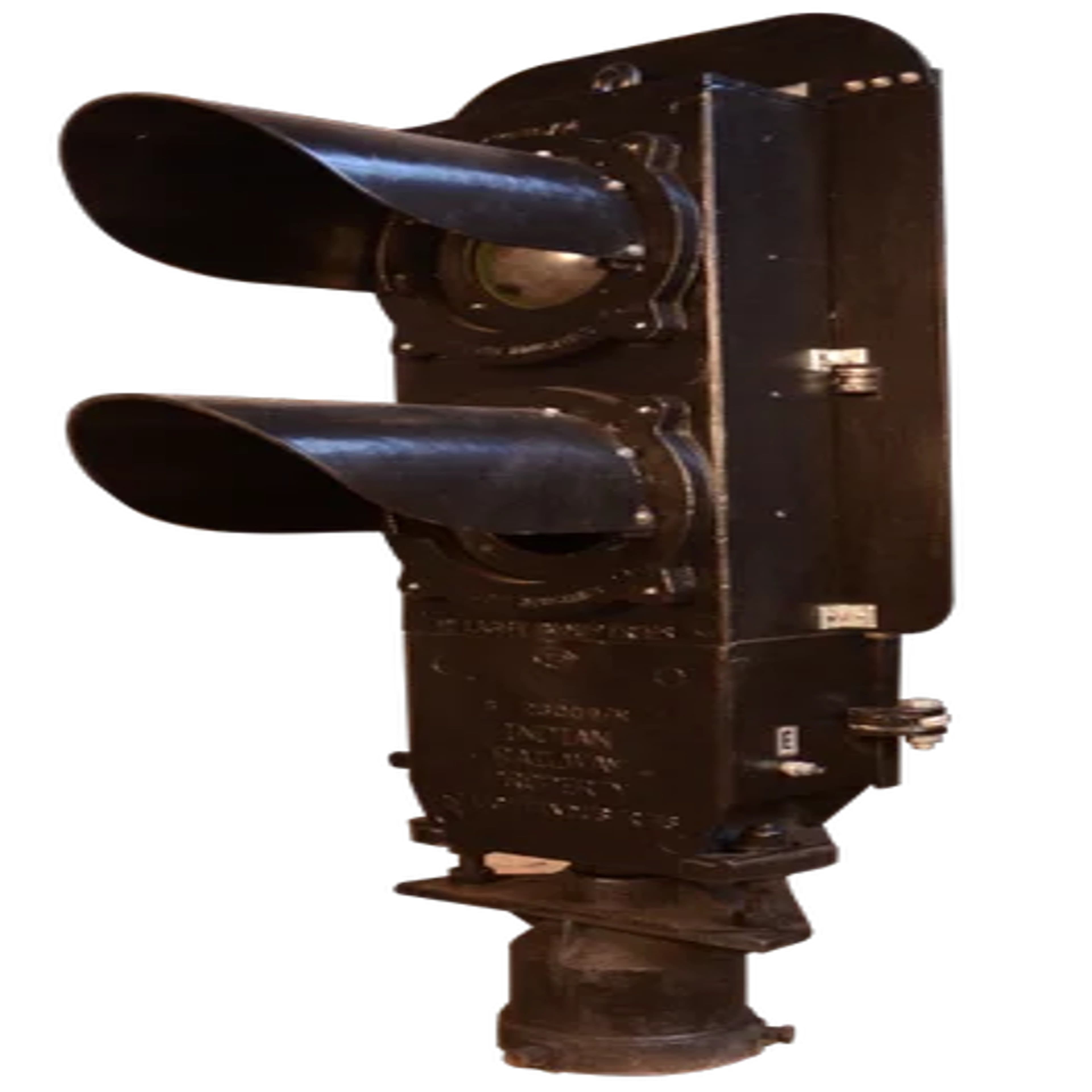
A colour light signal unit—often shortened to CLS unit—is the physical housing and optical assembly used to display a light. A complete signal may combine several units with a post, brackets, route indicators, identification plates and other fittings specified by the approved design.
Aspect, indication and signal unit
- Aspect: the visual appearance presented by the signal, such as a particular colour or combination of lights.
- Indication: the operational meaning associated with that aspect under the applicable railway rules.
- CLS unit: the physical component that produces one colour-light display.
The driver acts on the indication defined by the railway’s operating rules. The equipment manufacturer, installer and maintainer work with the physical units and circuits that must present the correct aspect under the commanded conditions.
What do 2-aspect, 3-aspect and 4-aspect systems mean?
The number describes the aspect system used in a signalling territory; it is not simply a count of lamps on every signal. A two-aspect arrangement provides fewer signalling states than a multi-aspect arrangement. Three- and four-aspect systems can provide additional information about conditions ahead, helping drivers regulate speed and braking over successive signal sections.
The exact aspect sequence, application and permissible combinations must be taken from the current signalling principles, operating rules and approved scheme for that railway. A general explainer should never be used as an operating instruction.
Two-aspect signalling
A two-aspect system uses a comparatively simple set of displays. Historically and operationally, the associated spacing and warning arrangements differ from multi-aspect colour light signalling. Project teams should use the terminology specified for the route rather than infer equipment solely from a photograph.
Three-aspect signalling
A three-aspect arrangement adds an intermediate warning state between the most restrictive and clear conditions. This provides the driver with advance information before reaching a signal at its most restrictive aspect.
Four-aspect signalling
A four-aspect arrangement provides a further warning stage. The additional information can support closer signal spacing while preserving the braking information required by the signalling design. Signal spacing, sighting and braking calculations remain engineering matters governed by the approved scheme.
What is inside a colour light signal unit?
Construction varies by specification and technology, but a unit generally combines a weather-resistant housing, an optical source, a lens or optical system, internal wiring and access provisions. Modern projects may use LED-based light sources, while other installations may use different approved arrangements. Visibility, colour, electrical performance and environmental protection are controlled by the relevant specification.
See the Principal Vinimay metallic and FRP CLS unit range for the current catalog entry. Final material and configuration should be matched to the project requirement.
Metallic and FRP housings
Housing material is one part of the complete selection. Metallic and fibre-reinforced plastic constructions have different mechanical, corrosion, weight, finish and maintenance characteristics. Procurement teams should compare only products offered against the same applicable drawing and performance requirement.
Questions to resolve before procurement
- Which approved specification, drawing and revision apply?
- What aspect configuration and colour units are required at each signal?
- Is the housing material prescribed, and what finish or colour is required?
- What optical, electrical and environmental tests are specified?
- Which mounting, hood, bracket, wiring and identification accessories form part of the supply?
Do not treat the housing as the complete signal
A CLS unit is an important component, but correct signalling depends on the entire engineered system: interlocking logic, circuits, power, cabling, mounting, sighting and operating rules. A sound purchase specification therefore describes the unit in the context of the approved signal arrangement.
CLS full form in railway signalling
CLS commonly means Colour Light Signal. A colour-light signal uses illuminated aspects to convey the indication defined by the railway rules and approved signalling system.
Read the terminology guide: CLS Full Form in Railway Signalling.
What four-aspect signalling adds
Multiple four-aspect signalling includes an additional attention indication within the signal sequence. The system design, not the housing alone, determines how the aspects are controlled and used.
Compare the configurations in 2-Aspect vs 3-Aspect vs 4-Aspect Railway Signalling.
CLS full form and the equipment it describes
CLS commonly means Colour Light Signal in railway signalling. The term describes a signal that uses illuminated colours in an approved arrangement to present aspects to the driver. A CLS installation includes more than the visible colour: signal units or light sources, lenses or optical components, housings, hoods, mounting, wiring and interfaces all contribute to the complete equipment.
- Use the approved signal plan to identify the required aspects.
- Separate the complete signal from an individual colour-light unit or housing.
- Define mounting, electrical and environmental interfaces in the enquiry.
Aspect, indication and signal unit are different terms
An aspect is the visual appearance presented by the signal at a particular time. Its indication is the information conveyed under the applicable operating rules. A signal unit is physical equipment used to create part of that appearance. Keeping these terms separate makes technical descriptions clearer and prevents an equipment quotation from being mistaken for a statement of operating meaning.
- Describe the physical equipment by units, housing, optics, light source and mounting.
- Describe required displayed aspects from the approved signalling documents.
- Refer operating meanings to current railway rules and authorised instructions.
Two-, three- and four-aspect descriptions
The number of aspects describes the approved information that the signal arrangement can present; it is not merely a count of coloured components in a catalog image. The applicable signalling system, signal function and location determine the arrangement. Procurement should identify the exact configuration and drawing rather than request a generic three- or four-aspect body.
Next step for a project enquiry
Compare two-, three- and four-aspect signalling to capture the controlling technical and commercial inputs.
View metallic and FRP CLS units for the relevant manufactured product and enquiry path.
Frequently asked questions
What is the full form of CLS in railway signalling?
CLS commonly stands for Colour Light Signal. The term refers to a signal using illuminated colours in an approved signalling arrangement.
What is a railway signal aspect?
An aspect is the visual appearance presented by a signal at a particular time.
What is the difference between an aspect and an indication?
The aspect is what is displayed; the indication is the information that display conveys under the applicable operating rules.
Is a CLS unit the complete signal?
Not always. A complete colour-light signal may include multiple units, housings, hoods, mounting, wiring and other interfaces.
Related railway guides
From research to procurement
Discuss your CLS Unit Metallic/FRP requirement
Send the applicable drawing or specification, quantity, project location and expected schedule. Our team will review the manufacturing and supply scope.
References and further reading
- Specification for LED Based Colour Light Signal Units — Research Designs and Standards Organisation
- Signal Types — Railway General Knowledge Capsule — SATHEE, IIT Kanpur
- Indian Railways Signal Engineering Manual — Essentials of Signalling — Ministry of Railways, Government of India
This educational material is a general overview. Project specifications, approved drawings and the latest applicable railway standards govern actual procurement, installation and maintenance.