Related project requirement
Need specifications or pricing for Apparatus Case?
Share the quantity, drawing or specification and delivery location for a project-specific review.
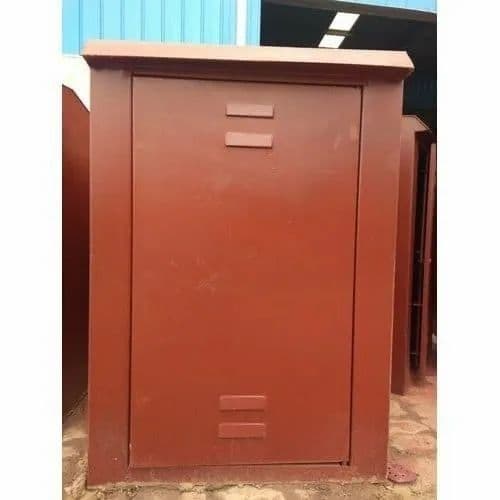
An apparatus case is a trackside enclosure used to house and protect equipment associated with railway signalling circuits. The term “location box” is also widely used, although terminology and the precise arrangement can vary between railways, projects and drawings. In practical terms, the enclosure creates a controlled, organised interface between field equipment, cables and the signalling system.
Because it is installed outdoors and close to the railway, an apparatus case has to do more than provide storage. It must support maintainable wiring, protect equipment from the surrounding environment and allow authorised staff to inspect or service the installation safely. The approved project specification and drawings always determine the final construction and internal arrangement.
What does an apparatus case do?
The principal role of the case is to provide a protected location for signalling equipment and cable terminations. Depending on the signalling scheme, the installation may accommodate terminals, relays, transformers, fuses, surge-protection components, cable entries and associated wiring. Not every apparatus case contains the same equipment, so the enclosure should be considered as part of the complete location design rather than as an isolated box.
- Protects installed equipment and terminations from rain, dust and accidental contact, subject to the specified enclosure design.
- Provides an organised point for connecting trackside cables and equipment circuits.
- Supports inspection, testing, identification and maintenance of wiring.
- Helps control cable entry, routing, bending and segregation within the available space.
Apparatus case, location box and junction box: are they identical?
The expressions are sometimes used loosely, but they should not automatically be treated as interchangeable. A large location or apparatus case may contain several items of signalling equipment and extensive wiring. A junction box is usually associated with cable termination or interconnection at a more localised point. The project bill of quantities, approved drawing and railway terminology should be used to identify the intended item.
Principal Vinimay supplies an apparatus case for railway signalling applications, along with related junction-box and equipment-room products. Product configuration should be confirmed against the applicable project requirement.
Key selection considerations
1. Approved drawing and dimensional requirement
Begin with the drawing, specification and equipment schedule issued for the work. External dimensions alone are not enough: mounting positions, shelves, terminal arrangements, clearances, cable-entry locations and door operation all affect suitability.
2. Material and environmental exposure
Trackside equipment may be exposed to sunlight, moisture, dust, vibration and handling during installation. The specified material, finish, sealing arrangement and corrosion protection should match the environmental and maintenance requirements stated for the project.
3. Cable entry and internal routing
Cable entries need to correspond with the civil and cable-routing plan. The internal layout should provide usable bend radii, clear identification and separation where the design requires it. Poor entry planning can make an otherwise adequate enclosure difficult to install and maintain.
4. Access, security and maintainability
Doors, locks, hinges and internal clearances should allow authorised access without obstructing adjacent equipment. Maintenance teams benefit from legible labels, logical terminal placement and enough working room to test circuits without disturbing unrelated wiring.
5. Earthing and bonding provisions
Metallic enclosures and installed equipment may require bonding or earthing in accordance with the approved signalling and electrical design. The method, conductor size and connection points must come from the applicable standard and project drawing—not from a generic assumption.
Information to include in a purchase enquiry
- Applicable specification, drawing number and revision.
- Required material, finish and quantity.
- External dimensions and the complete internal mounting arrangement.
- Cable-entry positions, gland or duct requirements, and any base details.
- Locking, labelling, earthing and inspection requirements.
- Documentation, testing and delivery expectations.
A useful rule for project teams
Select the apparatus case from the inside out. Confirm what equipment and terminations must be installed, how cables will enter, and how technicians will access the wiring. Then confirm the enclosure construction. This sequence reduces the risk of discovering space, entry or maintenance problems after installation.
How an apparatus case fits into a signalling location
A railway apparatus case is an outdoor enclosure that creates a protected and organised location for equipment, terminals and wiring associated with the signalling scheme. Its usefulness depends on the complete installation: equipment schedule, internal layout, cable route, foundation, access and environmental exposure. The enclosure should therefore be selected only after the location design and controlling documents are understood.
- Allow maintainable access to terminals and installed equipment.
- Coordinate cable entries with the route and internal bend space.
- Check doors, seals, drainage, locks, labels and earthing interfaces.
Full and half location boxes
Full and half apparatus cases are not interchangeable size labels. Indian Railways procurement schedules identify them against separate drawings, and the usable arrangement can differ by project. A smaller case may reduce footprint but can also reduce working space, cable-entry options and future capacity. Compare the approved drawing, equipment schedule and internal layout rather than choosing by external size alone.
- Confirm the drawing number and latest applicable revision.
- Check equipment clearances and terminal access before freezing the size.
- Verify the foundation and mounting interface for the selected case.
Inspection points before dispatch
Inspection should connect the finished case to the approved drawing and purchase order. Review dimensions, material evidence, fabrication, doors and locks, surface finish, cable-entry provisions, internal mounting details, labels, loose accessories and packing. Record any permitted deviation through the project approval process.
Next step for a project enquiry
Compare full and half location boxes in more detail to capture the controlling technical and commercial inputs.
View the railway apparatus case product page for the relevant manufactured product and enquiry path.
Frequently asked questions
What is an apparatus case in railway signalling?
It is a trackside enclosure used to protect and organise signalling equipment, terminals, cables and associated wiring at a defined location.
Is a location box the same as an apparatus case?
The terms are often used closely, but the controlling project drawing and item description determine the exact construction and scope.
What is the difference between full and half apparatus cases?
They follow different dimensional and arrangement requirements. Selection depends on the approved drawing, equipment, cable entries, access and installation footprint.
What information is needed for an apparatus case quotation?
Provide the drawing and revision, quantity, material and finish, internal arrangement, cable entries, locks, mounting, inspection plan and documents.
Related railway guides
From research to procurement
Discuss your Apparatus Case requirement
Send the applicable drawing or specification, quantity, project location and expected schedule. Our team will review the manufacturing and supply scope.
References and further reading
- Schedule of Rates 2024–25 — Apparatus Case Items — North Central Railway
- Railway Signalling Location Cases — Rail Safety Products
This educational material is a general overview. Project specifications, approved drawings and the latest applicable railway standards govern actual procurement, installation and maintenance.