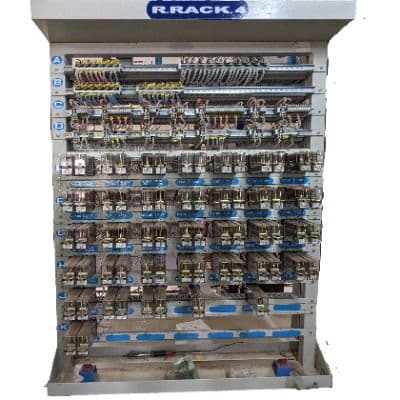
Related project requirement
Need specifications or pricing for Indoor Wiring Racks?
Share the quantity, drawing or specification and delivery location for a project-specific review.
Cable management inside a signalling rack is part of the engineered layout, not a finishing task. The entry position, wire route, segregation, termination order and identification method affect installation and future access.
Project teams should plan both the large incoming cables and the smaller internal wiring. A clean appearance is useful, but correspondence with approved circuits and maintainable access are the more important tests.
Map routes from entry to destination
Use the cable and termination schedules to trace every planned path. Allocate entry zones and main routes before placing ducts, terminals and equipment.
Maintain required segregation
Apply the segregation defined by the approved design and relevant instructions. Avoid inventing universal spacing rules when the project documents specify the required arrangement.
Control bends and mechanical stress
Provide usable bend space, support and restraint so cable weight is not carried by terminals. Protect conductors from sharp edges and overfilled routes.
Make identification readable
Labels should match the approved drawings and remain visible after wiring. Terminal, cable and wire identification needs a consistent format that survives inspection and maintenance.
Inspect workmanship systematically
Review routing, support, termination tightness, ferrules, labels, spare conductors, duct covers and drawing correspondence. Record corrections before the rack is energised or handed over.
Project checklist
- Cable and termination schedules
- Defined entry and distribution routes
- Required segregation
- Bend and support provisions
- Readable cable, wire and terminal labels
- Inspection and as-wired records
Review the indoor wiring racks product page for the relevant Principal Vinimay product and enquiry path.
Continue with the railway relay-rack guide for related technical or procurement context.
Use the approved project documents
This guide is a planning and procurement aid. The latest approved railway rules, drawings, specifications, quality plans and project instructions remain the controlling requirements for design, manufacture, installation, testing and acceptance.
Frequently asked questions
Should cable routing be decided during rack wiring?
The principal routes, entry zones and termination layout should be planned earlier from approved schedules and drawings.
What is the purpose of wire and terminal labels?
They support correspondence checks, fault finding and authorised maintenance by linking the physical installation to controlled records.
Why should spare conductors be managed?
They should be identified and secured according to the approved practice so they do not create confusion or interfere with working circuits.
Related railway guides
From research to procurement
Discuss your Indoor Wiring Racks requirement
Send the applicable drawing or specification, quantity, project location and expected schedule. Our team will review the manufacturing and supply scope.
References and further reading
- Signal Engineering Manual, Volume I — Indian Railways
- Handbook on Indian Railway Standard Drawings and Specifications for Signalling — Indian Railways / CAMTECH
- Indian Railways Signal Engineering Manual — Chapter 15: Cables — Indian Railways
This educational material is a general overview. Project specifications, approved drawings and the latest applicable railway standards govern actual procurement, installation and maintenance.