Related project requirement
Need specifications or pricing for Indoor Wiring Racks?
Share the quantity, drawing or specification and delivery location for a project-specific review.
A signalling relay is an electrically operated switching device used within approved signalling circuits. Depending on its designated function and specification, it can repeat a condition, control another circuit or support the logic that establishes safe system states.
The word “relay” is not a complete procurement description. Type, approved specification, coil characteristics, contact arrangement, mounting, plugboard or terminal interface and testing requirements must match the circuit design.
Circuit function comes first
The relay designation on the approved circuit and equipment schedule establishes its intended role. Procurement teams should not infer interchangeability merely because two devices have similar coil voltages or contact counts.
Broad relay categories
Railway training material distinguishes multiple relay technologies and applications, including specialised signalling relays and relay-interlocking arrangements. The current project specification determines which type is authorised.
Contacts, coil and mounting
State the required contact configuration, coil characteristics, mounting or plug-in arrangement, keying and associated base or plugboard. Check whether accessories and labels are included in the supply boundary.
Racks and wiring interfaces
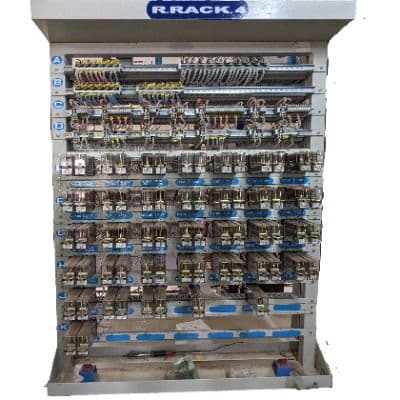
The relay works within a rack, wiring and terminal environment. Physical space, access, segregation, identification and compatibility with the approved rack layout must be coordinated.
Inspection and traceability
Use the specified routine tests, inspection authority, certificates, serial identification and packing requirements. Receipt checks should confirm the relay type and condition without disturbing controlled seals or settings.
Project checklist
- Approved relay designation and function
- Applicable specification and type
- Coil and contact arrangement
- Mounting, base and keying interface
- Required tests and identification
- Packing, storage and receipt checks
Review the railway relay and indoor wiring racks for the relevant Principal Vinimay product and enquiry path.
Continue with the railway relay-rack guide for related technical or procurement context.
Use current approved documents
This article is an educational and procurement-planning guide. The latest approved railway rules, drawings, specifications, quality plans and project instructions remain the controlling requirements for design, supply, installation, testing, commissioning and operation.
Frequently asked questions
Are all railway relays interchangeable?
No. Use the approved relay type, specification, electrical characteristics, contacts and mounting arrangement required by the circuit design.
Is a relay rack the same as a relay?
No. The relay is a switching device; the rack provides the organised physical mounting, wiring and access arrangement.
What information belongs in a relay enquiry?
Include designation, specification, type, coil and contacts, mounting or base, quantity, tests, inspection, identification and delivery requirements.
Related railway guides
From research to procurement
Discuss your Indoor Wiring Racks requirement
Send the applicable drawing or specification, quantity, project location and expected schedule. Our team will review the manufacturing and supply scope.
References and further reading
- IRISET Signal Notes — Indian Railways Institute of Signal Engineering and Telecommunications
- IRISET Signalling Lecture Slides — Indian Railways Institute of Signal Engineering and Telecommunications
- List of Signalling Specifications — Research Designs and Standards Organisation
- Indian Railways Signal Engineering Manual, Part I — Ministry of Railways, Government of India
This educational material is a general overview. Project specifications, approved drawings and the latest applicable railway standards govern actual procurement, installation and maintenance.