Related project requirement
Need specifications or pricing for Handcuff Lock?
Share the quantity, drawing or specification and delivery location for a project-specific review.
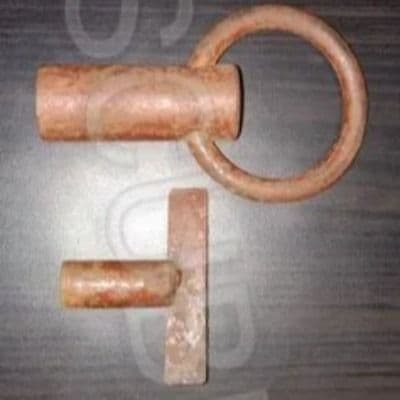
A railway gate or emergency barrier needs a positive securing arrangement that works with the approved operating procedure. A handcuff-style mechanical lock may be specified for a defined connection between barrier hardware and its fixed anchorage.
The lock should be selected as part of the complete gate arrangement. Compatibility, key control, chain or shackle interface, corrosion protection and authorised release all need definition.
Key points
- A lock supports the securing arrangement but does not define it
- Mechanical fit must be checked in both secured and released positions
- Keying and authorised access require project instructions
- Outdoor exposure and repeated handling influence material and finish
Function within the gate arrangement
The hardware should hold the intended barrier component in the required position and resist unintended release under normal service conditions. The locking point and load path come from the approved gate drawing.
Compatibility questions
Confirm available clearance, pin or eye dimensions, shackle movement, chain length where used, locking orientation and access for the operator. A lock can be strong yet unsuitable if it cannot be applied or inspected easily.
Key control and identification
The project should define key type, ward or coding, duplicate control, marking and storage. Emergency and routine arrangements should not be mixed through an undocumented substitution.
Inspection and maintenance
Inspect for deformation, wear, damaged keys, obstructed movement and corrosion. Verify that the lock engages fully and that retained chains or fittings do not create a trip or entanglement hazard.
Project checklist
- Approved locking point and purpose
- Interface dimensions and movement
- Keying and identification requirement
- Material and corrosion protection
- Retaining chain or accessory scope
- Inspection and maintenance access
Review the handcuff lock product page for the related Principal Vinimay product configuration and enquiry path.
For wider context, continue with the sliding boom barrier product page.
Final selection rule
Use the latest approved project drawings, specifications and railway instructions as the controlling requirements. This article explains terminology and selection questions; it does not replace design approval, signalling principles or site-specific engineering.
Frequently asked questions
Is a handcuff lock the same as an E-Type lock?
No. They are different hardware forms. The approved gate arrangement should state which locking method is required.
Can any padlock replace railway gate locking hardware?
No. Fit, keying, durability and the authorised operating arrangement must all be satisfied.
What information is needed for a gate-lock enquiry?
Provide the drawing, interface dimensions, keying requirement, material and finish, accessories, quantity and inspection scope.
Related railway guides
From research to procurement
Discuss your Handcuff Lock requirement
Send the applicable drawing or specification, quantity, project location and expected schedule. Our team will review the manufacturing and supply scope.
References and further reading
- Safety Precautions and Installation/Maintenance Guidelines for Level Crossing Gates — Indian Railways / CAMTECH
- Emergency Operations in Signal Interlocking Systems — Indian Railways / CAMTECH
- Indian Railways Signal Engineering Manual — Chapter 8: Drawings and Specifications — Indian Railways
This educational material is a general overview. Project specifications, approved drawings and the latest applicable railway standards govern actual procurement, installation and maintenance.