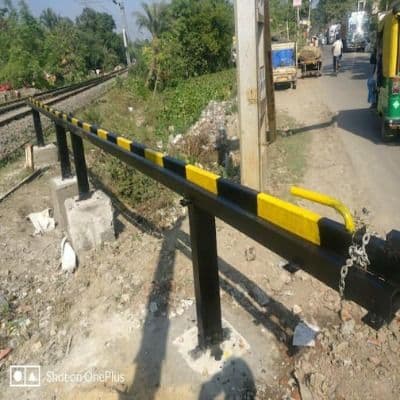
Related project requirement
Need specifications or pricing for Sliding Boom Barrier?
Share the quantity, drawing or specification and delivery location for a project-specific review.
Railway safety equipment is not a single product category. At level crossings and trackside locations, barriers, locks, signals, signs, detection, enclosures, cables and communication arrangements work within approved operating and maintenance procedures.
A component contributes to safety only when it is correctly specified, installed, inspected, operated and maintained as part of the authorised system. Marketing descriptions should not substitute for project requirements.
Barriers and emergency arrangements
Lifting barriers control road access under the normal approved arrangement. Emergency sliding booms may provide a separate contingency barrier where specified, with storage, locking and operating procedures defined by the railway.
Signals and indications
Road and railway users depend on the indications and controls provided by the approved system. Visibility, placement, proving and the relationship between the crossing and railway signals are design matters.
Locks, enclosures and access control
Locks and enclosures protect authorised equipment and operating interfaces. Key control, door condition, identification and maintenance access should be included in inspection routines.
Cable and power reliability
Protected cable routes, junctions, terminations and power arrangements support field equipment. Damage, water entry, poor identification or loose interfaces can undermine system availability.
Inspection and operational readiness
Check equipment against the approved arrangement, confirm access and movement, record defects and keep contingency equipment ready. Site staff must follow authorised operating and maintenance instructions.
Project checklist
- Approved crossing arrangement
- Barrier and contingency equipment
- Signals, indications and visibility
- Locks, enclosures and key control
- Cable, power and communication interfaces
- Inspection, defect and readiness records
Review the railway sliding boom barrier for the relevant Principal Vinimay product and enquiry path.
Continue with the sliding boom inspection checklist for related technical or procurement context.
Use current approved documents
This article is an educational and procurement-planning guide. The latest approved railway rules, drawings, specifications, quality plans and project instructions remain the controlling requirements for design, supply, installation, testing, commissioning and operation.
Frequently asked questions
Is an emergency sliding boom the normal crossing barrier?
No. It is a separate contingency arrangement where specified; the approved crossing design and procedures define its use.
Does one product make a level crossing safe?
No. Safety depends on the complete approved system, procedures, installation, inspection, operation and maintenance.
What should a trackside inspection record?
Record equipment identity and condition, access, movement where applicable, locks, visibility, cables, enclosures, defects and required corrective action.
Related railway guides
From research to procurement
Discuss your Sliding Boom Barrier requirement
Send the applicable drawing or specification, quantity, project location and expected schedule. Our team will review the manufacturing and supply scope.
References and further reading
- Indian Railway Signal Engineering Manual — Chapter 7: Essentials of Signalling — Ministry of Railways, Government of India
- Outdoor Signalling — Installation, Testing and Maintenance of Equipment — Ministry of Railways, Government of India
- IRISET Signal Notes — Indian Railways Institute of Signal Engineering and Telecommunications
This educational material is a general overview. Project specifications, approved drawings and the latest applicable railway standards govern actual procurement, installation and maintenance.