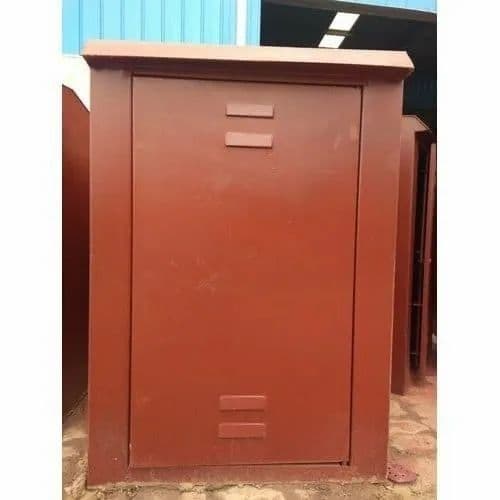
Related project requirement
Need specifications or pricing for Apparatus Case?
Share the quantity, drawing or specification and delivery location for a project-specific review.
A trackside enclosure protects equipment only when its complete construction and installed interfaces work together. Door geometry, joints, cable entries, finish, drainage and mounting can each affect exposure to water, dust and corrosion.
Weather protection should be specified from the applicable drawing and project environment. A general enclosure description or an unverified ingress rating is not a substitute for the required railway specification and inspection plan.
Start with the enclosure construction
Review roof, door, overlap, hinge, lock, joint and base details on the controlled drawing. Inspect for distortion and gaps that may arise during fabrication or handling.
Treat every cable entry as an interface
Entries should match the cable and approved gland, sleeve or conduit arrangement. Unused openings need a defined closure rather than an improvised site solution.
Consider drainage and installation level
The approved installation should manage surface water and avoid creating unintended collection points. Drainage features must not be blocked by foundations, sealing work or debris.
Specify material preparation and finish
Define material, surface preparation, coating or other finish and repair requirements. Inspection should look for incomplete coverage, damage, contamination and vulnerable cut edges.
Protect the enclosure through delivery
Packing, lifting and storage should avoid distortion, coating damage and water entry. Record defects before installation so responsibility and corrective work are clear.
Project checklist
- Controlled enclosure drawing
- Door, joint and locking condition
- Defined cable-entry interfaces
- Drainage and installation level
- Material, preparation and finish
- Packing, storage and damage inspection
Review the railway apparatus case product page for the relevant Principal Vinimay product and enquiry path.
Continue with the apparatus-case selection guide for related technical or procurement context.
Use the approved project documents
This guide is a planning and procurement aid. The latest approved railway rules, drawings, specifications, quality plans and project instructions remain the controlling requirements for design, manufacture, installation, testing and acceptance.
Frequently asked questions
Does an enclosure alone determine weather protection?
No. Cable entries, foundation, drainage, installation quality, damage and maintenance condition also affect protection.
Should an ingress rating be assumed from appearance?
No. Use the applicable specification, declared construction and required test or inspection evidence.
What should be checked after transport?
Inspect geometry, doors, locks, joints, finish, openings and signs of impact or water exposure before installation.
Related railway guides
From research to procurement
Discuss your Apparatus Case requirement
Send the applicable drawing or specification, quantity, project location and expected schedule. Our team will review the manufacturing and supply scope.
References and further reading
- Outdoor Signalling — Installation, Testing and Maintenance of Equipment — Indian Railways
- Handbook on Indian Railway Standard Drawings and Specifications for Signalling — Indian Railways / CAMTECH
- Signal Engineering Manual, Volume I — Indian Railways
This educational material is a general overview. Project specifications, approved drawings and the latest applicable railway standards govern actual procurement, installation and maintenance.