Related project requirement
Need specifications or pricing for DWC Pipe?
Share the quantity, drawing or specification and delivery location for a project-specific review.
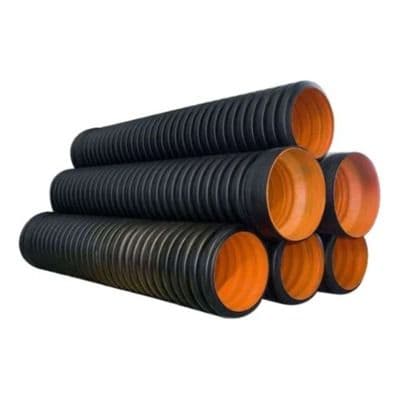
DWC-HDPE and galvanised iron pipe can both appear in railway cable-protection work, but they have different construction and installation behaviour. DWC duct has a corrugated outer wall and smoother inner surface; GI pipe is a rigid metallic conduit or sleeve.
Selection is location-specific. The cable plan and applicable drawing should identify where each protection method is required, particularly at track crossings, road crossings, equipment entries and difficult terrain.
Key points
- DWC supports continuous underground duct routes and cable pulling
- GI provides rigid local mechanical protection where specified
- Joints, edges, bends and transitions can matter as much as pipe material
- Metallic pipe can introduce bonding and corrosion considerations
DWC-HDPE characteristics
The two-wall construction combines an outer corrugated profile with a smooth inner path. A complete duct system includes compatible fittings and joints, and should be free from projections that could damage the cable.
GI pipe characteristics
GI pipe offers a rigid metallic path. Wall, finish, threading or jointing, end treatment, supports and bend arrangement must suit the crossing or exposed interface. Poorly finished ends can damage a cable during pulling.
Route and installation questions
Check expected mechanical loading, pull length, bend radius, drainage, joint locations, future access and transitions. A low-cost pipe can become expensive if the route makes cable pulling or replacement impractical.
Why hybrid routes are common
One project can use DWC for an underground run and GI for a local sleeve or exposed transition. The connection between systems needs the same attention as each pipe: alignment, sealing, edge protection, support and record drawings.
Project checklist
- Approved route and crossing drawing
- Cable outside diameter and pull plan
- Pipe size, class and joint system
- Bends, entries and edge treatment
- Drainage and sealing approach
- Bonding and corrosion requirements for metal
Review the DWC pipe product page for the related Principal Vinimay product configuration and enquiry path.
For wider context, continue with the railway signalling cable-protection guide.
Final selection rule
Use the latest approved project drawings, specifications and railway instructions as the controlling requirements. This article explains terminology and selection questions; it does not replace design approval, signalling principles or site-specific engineering.
Frequently asked questions
Is DWC pipe always better than GI pipe?
No. They suit different route conditions. The approved cable-protection drawing should identify the required method.
Why is the inside of DWC duct smooth?
A smoother inner wall supports cable pulling and reduces harmful projections within the conduit path.
Does GI cable-protection pipe need bonding?
Metallic protection may require bonding under the approved earthing design. The method should not be assumed from the material alone.
Related railway guides
From research to procurement
Discuss your DWC Pipe requirement
Send the applicable drawing or specification, quantity, project location and expected schedule. Our team will review the manufacturing and supply scope.
References and further reading
- RDSO/SPN/204/2011 — Double Walled Corrugated HDPE Ducts — RDSO
- Indian Railways Signal Engineering Manual — Chapter 15: Cables — Indian Railways
- Safety Guidelines for Signalling Cables — RDSO
This educational material is a general overview. Project specifications, approved drawings and the latest applicable railway standards govern actual procurement, installation and maintenance.