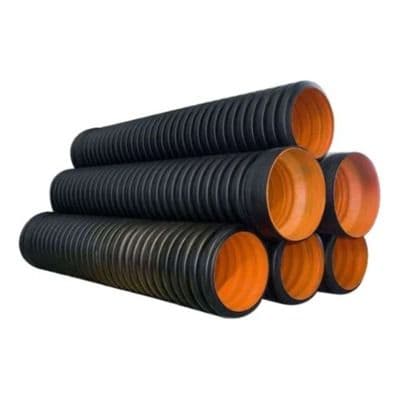
Related project requirement
Need specifications or pricing for DWC Pipe?
Share the quantity, drawing or specification and delivery location for a project-specific review.
Pipe or trough size should be derived from the cables and route rather than selected from a familiar nominal diameter. Outside dimensions, bends, pulling length, joints, entry interfaces and approved spare requirements all influence the workable arrangement.
This guide explains the information to assemble. It does not provide a universal fill percentage or bend rule; those values must come from the applicable cable, duct and project requirements.
Create a route-specific cable list
List every cable on the route with its type, outside diameter, origin, destination and whether it continues through or exits at an intermediate point. Separate confirmed future provision from unspecified contingency.
Model the most constrained section
Check bends, crossings, joints, chambers and entries rather than only a straight section. The route must permit installation without violating approved cable-handling limits.
Coordinate internal and external dimensions
Nominal product size may not equal usable internal space. Use manufacturer and specification data for the exact pipe, fitting or trough arrangement under consideration.
Plan pulling and access points
Long routes or changes in direction may require approved chambers, draw points or staged installation. Define how cables will be pulled, supported, identified and inspected.
Prepare the procurement schedule
State product type, applicable specification, size, length, fittings, split or standard configuration where relevant, jointing, accessories, inspection and delivery requirements.
Project checklist
- Approved cable schedule
- Actual cable outside diameters
- Route length, bends and crossings
- Usable internal product dimensions
- Pulling and access arrangement
- Fittings, joints and inspection scope
Review the DWC pipe product page for the relevant Principal Vinimay product and enquiry path.
Continue with the railway cable-protection guide for related technical or procurement context.
Use the approved project documents
This guide is a planning and procurement aid. The latest approved railway rules, drawings, specifications, quality plans and project instructions remain the controlling requirements for design, manufacture, installation, testing and acceptance.
Frequently asked questions
Can pipe size be selected from cable count alone?
No. Cable outside diameters, route geometry, pulling limits, entries and approved spare requirements also matter.
Is nominal pipe diameter the same as usable space?
Not always. Confirm the exact product dimensions and fittings against the applicable specification and manufacturer data.
Should future cables always be included?
Include only approved future provision and identify it separately so the basis of the selected route is clear.
Related railway guides
From research to procurement
Discuss your DWC Pipe requirement
Send the applicable drawing or specification, quantity, project location and expected schedule. Our team will review the manufacturing and supply scope.
References and further reading
- Indian Railways Signal Engineering Manual — Chapter 15: Cables — Indian Railways
- Handbook on Indian Railway Standard Drawings and Specifications for Signalling — Indian Railways / CAMTECH
This educational material is a general overview. Project specifications, approved drawings and the latest applicable railway standards govern actual procurement, installation and maintenance.