Related project requirement
Need specifications or pricing for TLJB Junction Box?
Share the quantity, drawing or specification and delivery location for a project-specific review.
Railway components range from major assemblies to small fabricated or machined interfaces. In signalling projects, enclosures, junction points, brackets, pins, locks, pipes, troughs and grounding parts support the operation and maintainability of the wider system.
Calling an item “small hardware” does not remove the need for accurate dimensions, material, finish, fit, identification and inspection. A minor mismatch can prevent installation or create an unauthorised deviation.
Enclosures and junction components
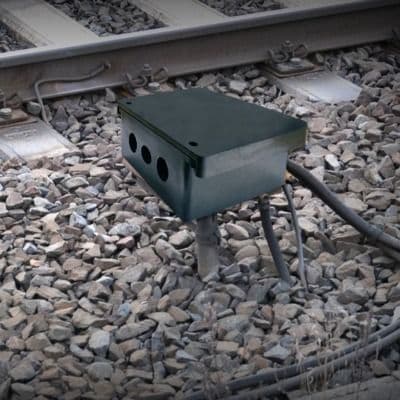
Apparatus cases and junction boxes protect equipment or terminations. Doors, locks, mounting plates, terminal arrangements and cable entries are part of the component boundary and should be included explicitly.
Mounting and alignment hardware
Brackets, pins, supports and fixing arrangements position equipment relative to approved structures and clearances. Hole patterns, offsets, orientation and mating dimensions require drawing correspondence.
Cable-protection components
Pipes, ducts, troughs, bends, couplers and entry accessories form a protected cable route. Selection depends on cable schedules, route geometry, interfaces and the approved project standard.
Grounding and bonding interfaces
Earth pipes and ground-connection components form parts of approved earthing or bonding arrangements. Their application, material, dimensions and connection details must follow the controlling design.
Component procurement discipline
Use a part identifier, drawing and revision, material, finish, quantity, mating interface, inspection criteria and packing requirement. Samples or photographs should supplement—not replace—controlled dimensions.
Project checklist
- Part name and unique identifier
- Drawing and current revision
- Material, process and finish
- Mating dimensions and orientation
- Inspection criteria and records
- Marking, quantity and packing
Review the track lead junction box product page for the relevant Principal Vinimay product and enquiry path.
Continue with the railway equipment dimensional inspection guide for related technical or procurement context.
Use current approved documents
This article is an educational and procurement-planning guide. The latest approved railway rules, drawings, specifications, quality plans and project instructions remain the controlling requirements for design, supply, installation, testing, commissioning and operation.
Frequently asked questions
Why do small railway components need controlled drawings?
They often interface with other equipment, structures or cables, so dimensions and orientation must correspond with the approved installation.
Can a photograph define a component?
A photograph can clarify appearance but should not replace the drawing, dimensions, material, finish and acceptance criteria.
What should be checked at receipt?
Verify identity, quantity, dimensions, material or certificates where required, finish, marking, packing condition and inspection release.
Related railway guides
From research to procurement
Discuss your TLJB Junction Box requirement
Send the applicable drawing or specification, quantity, project location and expected schedule. Our team will review the manufacturing and supply scope.
References and further reading
- Indian Railway Signal Engineering Manual — Chapter 8: Drawings and Specifications — Ministry of Railways, Government of India
- Outdoor Signalling — Installation, Testing and Maintenance of Equipment — Ministry of Railways, Government of India
- List of Signalling Specifications — Research Designs and Standards Organisation
This educational material is a general overview. Project specifications, approved drawings and the latest applicable railway standards govern actual procurement, installation and maintenance.