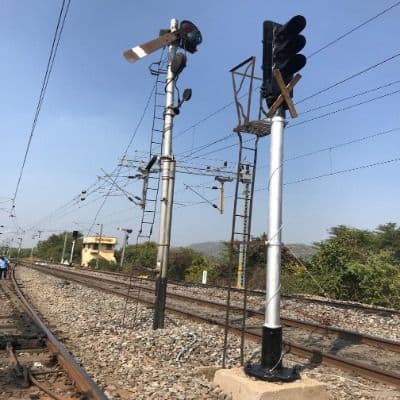
Related project requirement
Need specifications or pricing for Signal Unit Complete?
Share the quantity, drawing or specification and delivery location for a project-specific review.
S&T stands for Signal and Telecommunication in railways. Signalling protects and regulates train movements, while telecommunications carries operational information and supports railway communication services; projects coordinate both through defined technical interfaces.
Projects coordinate both areas through routes, rooms, power, cables, earthing, civil interfaces and controlled documentation. Clear scope boundaries prevent omissions and duplicated supply.
Signalling equipment categories
Signals, detection, points, interlocking, block-working equipment, relays, racks, junction boxes and associated cables implement the approved signalling arrangement.
Telecommunication equipment categories
Railway telecommunications can include transmission, control communication, station systems and other authorised networks. The applicable telecom design and specifications control the required equipment.
Shared physical interfaces
Cable routes, equipment rooms, ducts, power supplies, batteries, earthing, foundations and environmental provisions may serve or affect both disciplines. Ownership of each interface should be stated.
Documentation and identification
Separate drawings and schedules should remain coordinated through common location references, route plans and interface registers. Labels must make circuit and discipline ownership clear.
Procurement boundary
An S&T package should list signalling items, telecom items, shared infrastructure, installation scope, testing responsibility and exclusions. Avoid using “complete S&T” without a detailed schedule.
Project checklist
- Signalling equipment schedule
- Telecommunication equipment schedule
- Shared cable, power and room interfaces
- Civil, structural and environmental provisions
- Testing and commissioning responsibilities
- Scope exclusions and interface register
Review the railway signalling and mechanical products for the relevant Principal Vinimay product and enquiry path.
Continue with the railway signalling cable-protection guide for related technical or procurement context.
Use current approved documents
This article is an educational and procurement-planning guide. The latest approved railway rules, drawings, specifications, quality plans and project instructions remain the controlling requirements for design, supply, installation, testing, commissioning and operation.
Frequently asked questions
What does S&T mean in railways?
It commonly refers to Signal and Telecommunication, two related disciplines with different technical functions and defined interfaces.
Are signalling and telecom cables the same?
Cable types and requirements depend on their approved application and specification; they should not be assumed interchangeable.
What should an S&T procurement package define?
It should define equipment schedules, shared interfaces, installation, testing, commissioning responsibilities, documentation and exclusions.
What is the full form of S&T in railway?
S&T stands for Signal and Telecommunication in the railway context.
What is S and T in railway?
It is the railway discipline covering signalling systems and operational telecommunication systems, including their defined project interfaces.
Related railway guides
From research to procurement
Discuss your Signal Unit Complete requirement
Send the applicable drawing or specification, quantity, project location and expected schedule. Our team will review the manufacturing and supply scope.
References and further reading
- Indian Railways Signal Engineering Manual, Part I — Ministry of Railways, Government of India
- IRISET Signal Notes — Indian Railways Institute of Signal Engineering and Telecommunications
- IRISET Signalling Lecture Slides — Indian Railways Institute of Signal Engineering and Telecommunications
This educational material is a general overview. Project specifications, approved drawings and the latest applicable railway standards govern actual procurement, installation and maintenance.