Related project requirement
Need specifications or pricing for Signal Unit Complete?
Share the quantity, drawing or specification and delivery location for a project-specific review.
Railway signalling equipment is a broad category covering field indications, trackside interfaces, equipment-room hardware, cable protection and associated mechanical components. A product name alone rarely defines a complete supply scope.
For procurement, the useful question is not simply “what equipment is available?” It is “which approved drawing, specification, interface and inspection requirement controls this item at this location?”
Signals and indications
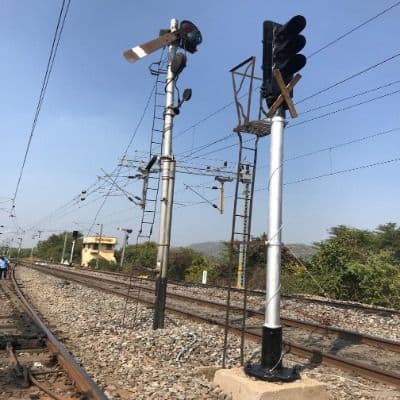
Colour light signal housings, complete signal assemblies and route indicators present approved indications to the driver. Their configuration depends on the signalling plan, required aspects or displays, sighting, mounting and electrical interfaces.
Trackside enclosures and junction points
Apparatus cases and track lead junction boxes provide protected locations for equipment, terminations or cable interfaces. Enclosure size, internal arrangement, cable entries, foundation and lock requirements should come from controlled project documents.
Equipment-room hardware
Indoor wiring racks and relay racks organise equipment, terminals and interconnections. The rack general arrangement must correspond with equipment schedules, terminal plans, cable routes, segregation and maintenance access.
Cable protection and mechanical accessories
Pipes, troughs, brackets, locks, pins and grounding components support the complete installation. Even simple fabricated items need defined material, dimensions, finish, interfaces and inspection acceptance.
Information that makes an enquiry usable
State the product, approved drawing and revision, specification, quantity, material, finish, accessories, interface dimensions, inspection authority, test documents, marking, packing and delivery location. Ask suppliers to list exclusions and deviations.
Project checklist
- Product and intended installation
- Approved drawing and current revision
- Applicable specification and amendments
- Interfaces, accessories and supply boundary
- Inspection and documentation requirements
- Quantity, packing and delivery schedule
Review the railway signalling product catalogue for the relevant Principal Vinimay product and enquiry path.
Continue with the railway signalling hardware RFQ checklist for related technical or procurement context.
Use current approved documents
This article is an educational and procurement-planning guide. The latest approved railway rules, drawings, specifications, quality plans and project instructions remain the controlling requirements for design, supply, installation, testing, commissioning and operation.
Frequently asked questions
What is included in railway signalling equipment?
The term may include signals, indicators, relays, enclosures, junction boxes, racks, cable-protection items and associated mechanical hardware. The project documents define the actual scope.
Is a catalogue description enough for procurement?
No. Use the approved drawing, specification, interfaces, accessories and inspection requirements to define the item.
Can one specification apply to every signalling product?
No. Each equipment category can have its own controlling drawings, specifications and inspection requirements.
Related railway guides
From research to procurement
Discuss your Signal Unit Complete requirement
Send the applicable drawing or specification, quantity, project location and expected schedule. Our team will review the manufacturing and supply scope.
References and further reading
- Indian Railways Signal Engineering Manual, Part I — Ministry of Railways, Government of India
- Indian Railway Signal Engineering Manual — Chapter 7: Essentials of Signalling — Ministry of Railways, Government of India
- Indian Railway Signal Engineering Manual — Chapter 8: Drawings and Specifications — Ministry of Railways, Government of India
- List of Signalling Specifications — Research Designs and Standards Organisation
This educational material is a general overview. Project specifications, approved drawings and the latest applicable railway standards govern actual procurement, installation and maintenance.